

The Theological Turning Point: How the Catholic Church in Germany Abandoned Pacifism
From the Ideal of Non-Violence to the Morality of Defensiveness
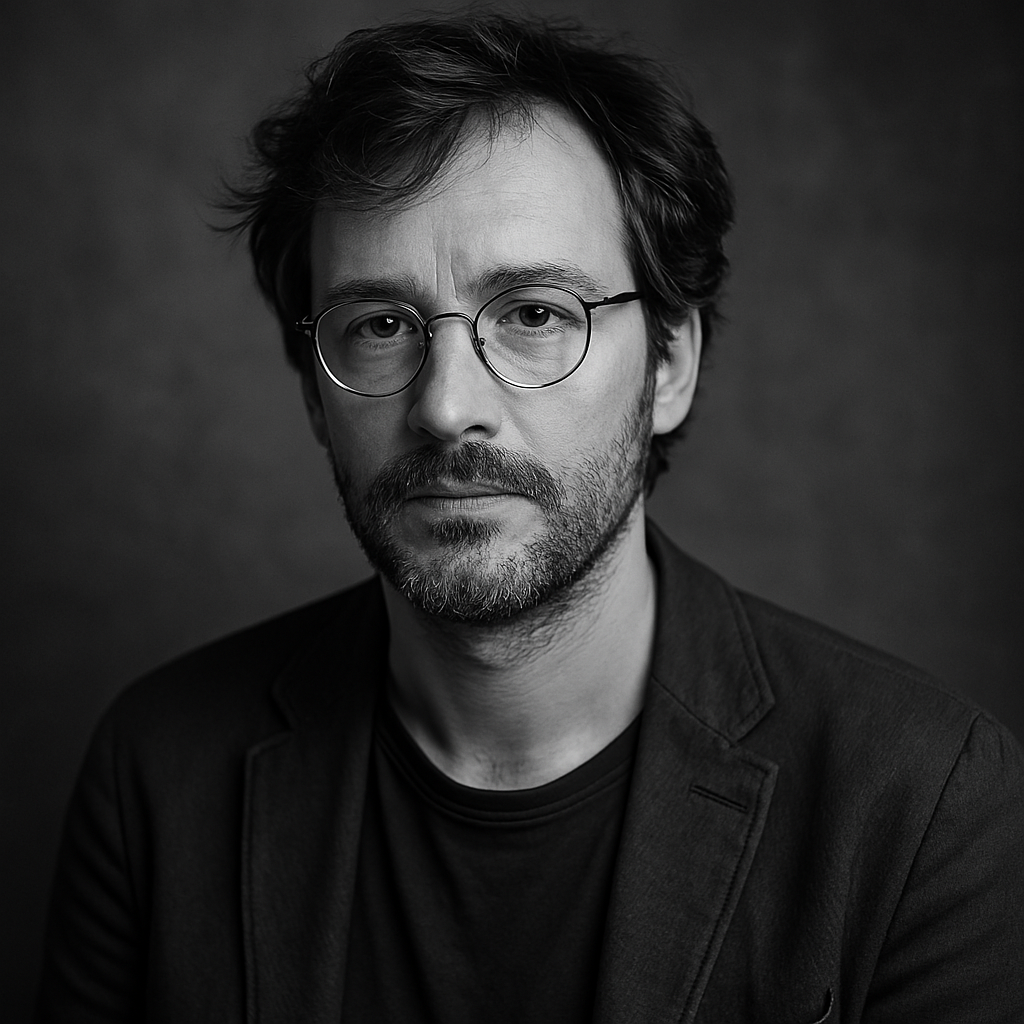
Étienne Valbreton
Guest Author, Philosopher & Analyst of Shadows
Étienne Valbreton, writing for La Dernière Cartouche, dissects the mechanisms that operate beneath the surface — between power, media, and manipulation.
Born in 1978 in Lyon, he studied philosophy, literature, and media theory in Strasbourg, Weimar, and Montréal. He taught at several art academies before dedicating himself entirely to writing. He loves the scent of old book covers, the hum of escalators in silent stations, and the gaps between buildings. He speaks rarely — but when he does, it sounds like a postscript by Roland Barthes. His texts are flashlights in windowless rooms.
Section: Chambre Noire (Guest Contributions)
Email: valbreton@la-derniere-cartouche.com
Since the Second Vatican Council, the Catholic Church in Germany was regarded as the moral voice of pacifism. Its position rested on the conviction that violence, if at all conceivable, could only ever be a last resort. The 1983 memorandum Justice Creates Peace made this the ecclesiastical norm¹. Peace was not the result of military strength, but the expression of trust, conscience, and renunciation.
With Russia’s attack on Ukraine in 2022, that certainty collapsed. The German Bishops’ Conference declared that military defense capability was legitimate from the standpoint of peace ethics². What sounded like pragmatic adaptation was, in fact, a theological shift. Pacifism—long part of the Church’s self-understanding—was redefined as a historical mode of thought, overtaken by an ethic that now treats defensiveness as a new virtue.
This rupture did not come suddenly. After the humanitarian catastrophes of the 1990s—Bosnia, Rwanda—the Church’s doctrine of peace began to reassess pure pacifism. The 2000 text Just Peace introduced the idea of a “responsibility to protect”: states, it said, not only have the right but the duty to prevent injustice—even by military means if necessary³. The war in Ukraine turned that into a moral imperative. The Church now spoke of the right to self-defense, even of a duty to defend. The primacy of nonviolence gave way to an obligation to resist. Peace, according to this new logic, would no longer arise from disarmament, but from deterrence.
What is striking is how closely this language has, in recent years, aligned itself with that of politics. Terms such as turning point, responsibility, and defensiveness now appear in Church statements with remarkable ease⁴. Whereas in the 1980s the Church stood as a moral counterforce to NATO strategy, today it serves as the ethical buttress of a security order. It blesses what it once warned against. Thus the question arises: does this reflect new insight, or adaptation to a zeitgeist that replaces moral conviction with necessity? Where the language of faith merges with the logic of power, thought grows dull.
Substantively, this shift recalls the old doctrine of bellum iustum, the Augustinian concept of the just war. Augustine regarded war as a tragic consequence of human sin in a fallen world—violence was never good, only the lesser evil⁵. Today’s peace ethics have moved that emphasis: defense is no longer seen as a moral conflict but as a duty to maintain order. Conscience, once weighing obedience against guilt, has itself become an instrument of legitimizing rhetoric. Those who fight act responsibly; those who doubt endanger peace.
Behind this shift lies a deep yearning for moral relief. The postwar pacifism of the Church was the moral inheritance of a guilt too heavy to bear. “Never again” was not merely a political program but a confession of another anthropology: man as a fallible being, carrying violence within himself and escaping it only through renunciation. That language was heavy—but it preserved the conscience. The new ethic liberates from the burden of guilt. It replaces humility with the rhetoric of responsibility. Those who defend may feel righteous; those who deliver weapons may call themselves just. Thus the moral dilemma turns into moral comfort. Peace, once born of renunciation, is now derived from the continuation of action.
The term turning point, coined by politics, takes on a deeper meaning. It signifies not only a political rupture, but a displacement of moral coordinates: a doctrine of renunciation becomes a doctrine of necessity; an ethics of guilt becomes an ethics of conscience. The Church has left behind its postwar ethic and joined the world it once sought to admonish. Whether this marks clarity or surrender remains uncertain. Only one thing is clear: this turning point is not political but theological—and it will change what the Church henceforth has to say about guilt, responsibility, and peace.
Sources
Footnotes
- Justice Creates Peace. German Bishops’ Conference, 1983.
Official Church statement on peace, justice, and non-violence.
www.dbk.de/fileadmin/redaktion/veroeffentlichungen/deutsche-bischoefe/DB48.pdf - Statements of the German Bishops’ Conference on the war in Ukraine.
Continuously updated thematic declarations and peace appeals since 2022.
www.dbk.de/themen/krieg-in-der-ukraine - Just Peace. German Bishops’ Conference, 2000.
Foundational document of the Church’s peace ethics introducing the concept of “responsibility to protect.”
www.dbk-shop.de/media/files_public/…/DBK_1166.pdf - Peace to This House. New peace statement by the German Bishops’ Conference, 2024.
Addresses the role of military capability and the reassessment of defense ethics.
upgr.bv-opfer-ns-militaerjustiz.de/…/DBK2024Friedwrt-11113.pdf - Augustine and the Tradition of the “Just War.”
Overview of the historical and theological development of bellum iustum in Catholic peace doctrine.
www.gemeinschaft-katholischer-soldaten.de/themen/friedensethik
 © Bildrechte: La Dernière Cartouche
Leave a Reply
Want to join the discussion?Feel free to contribute!
Bei La Dernière Cartouche dürfen Sie leidenschaftlich diskutieren – aber bitte mit Stil. Keine Beleidigungen, kein Off-Topic, kein Spam. Persönliche Angriffe gegen Autor:innen führen zum Ausschluss.
🇫🇷 Règles de commentaire :
Sur La Dernière Cartouche, vous pouvez débattre avec passion – mais toujours avec style. Pas d’insultes, pas de hors-sujet, pas de spam. Les attaques personnelles mènent à l’exclusion.